First instrument / in-house build

FogLab.

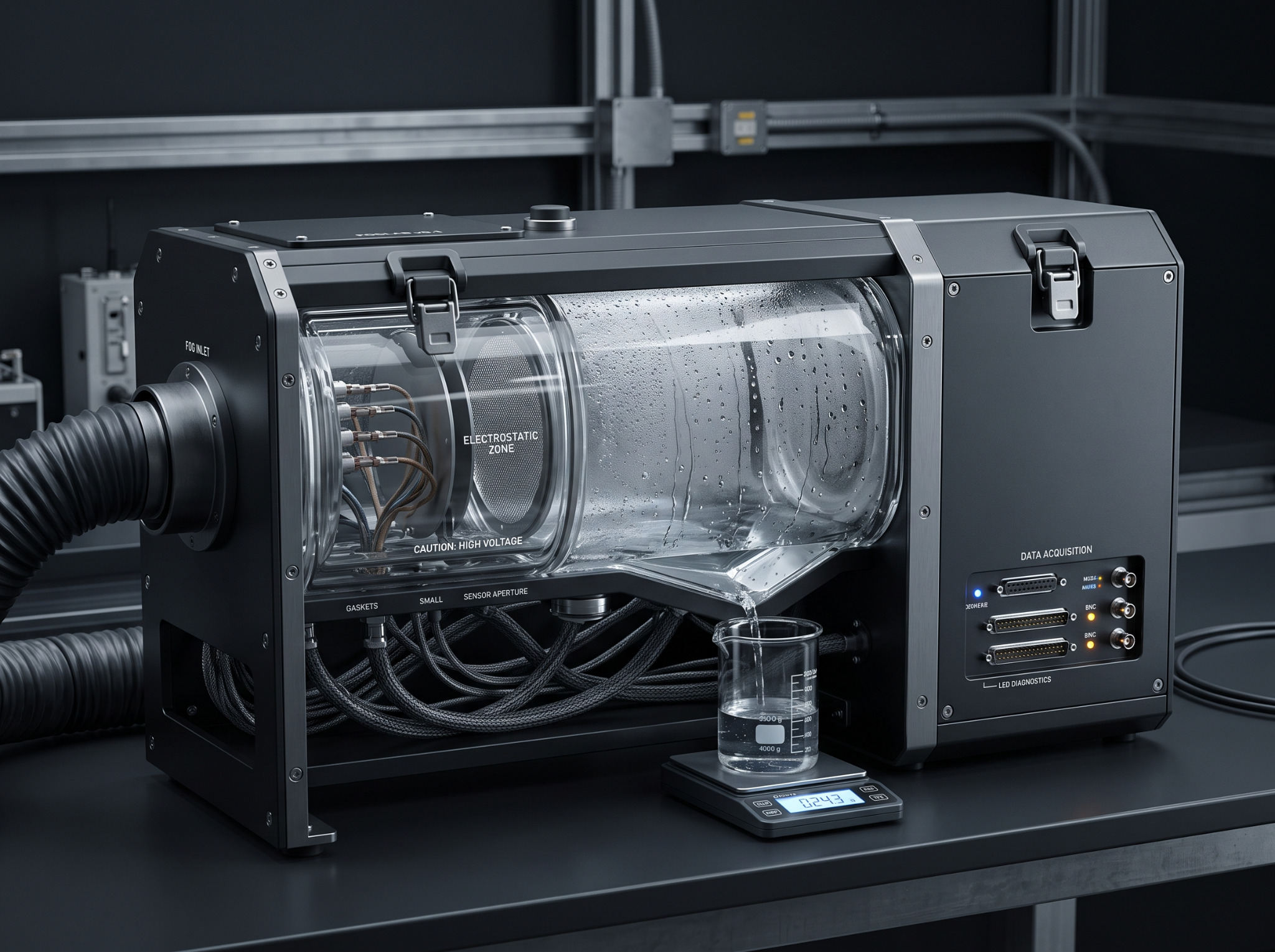
Our first instrument, planned for an in-house build: a controlled platform to test whether an electrical collector makes fog measurably clearer than the same collector with its power off.

IN-HOUSE BUILD PLANNED · DESIGN & QUALIFICATION FIRST · NO EXPERIMENTS RUN
FogLab instrument concept with a glass-sided test chamber and sensor modules
FogLab visual concept. Geometry and hardware remain subject to experimental design.
THE FIRST DECISION

Does powering it
change the view?

The confirmation test compares a collector with its power on against the same collector with its power off. Its primary endpoint is normalized optical extinction, with an independent upstream reference and a predeclared analysis.

Water collection, wet droplet sizes, charge exposure and energy explain the result and its usefulness. None substitutes for the optical endpoint.

FOUR CONDITIONS / ONE CLEAR COMPARATOR

Give every effect a reference.

The collector’s passive action stays visible. Charge without a collector is its own exploratory question, including the possibility of worsening visibility.

WX-FOG-001 proposed experiment conditions
ConditionChargeCollectorWhat it resolves
AOffAbsentReference for charge-only exploration
BOnAbsentCharge-only response, with both signs allowed
COffPresentPassive deposition and collector geometry
DOnIdentical to CIncremental effect of energizing the collector
Primary comparison: D versus C. Direct optical extinction is normalized to transit-aligned upstream measurements. A powered system can change droplet motion, airflow or microphysics; an optical effect alone does not isolate a single microscopic mechanism.
QUALIFY THE MEASUREMENT

A sensor is part
of the experiment.

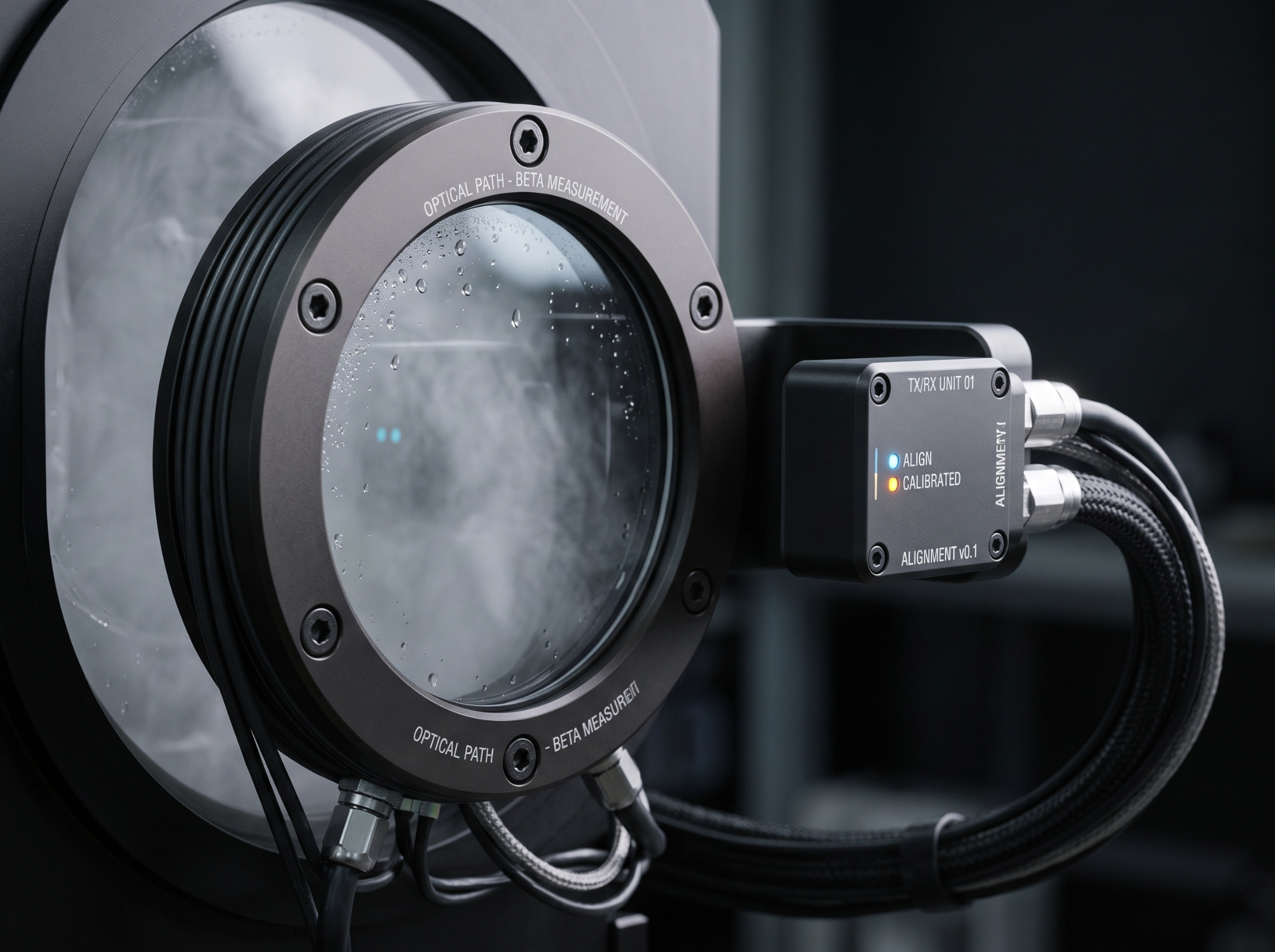
Optical alignment, wet windows, sampling losses, humidity changes and transit time can each create a misleading signal. The protocol makes their qualification a prerequisite for the confirmation claim.

Wet particle sizing includes hydrated aerosol where the instrument range permits, with explicit bounds for missing tails. The workbench exposes the difference between water-weighted and light-weighted size distributions.

Explore a droplet spectrum ↗Inspect a bias budget ↗
Concept of an optical window and sensor module for the fog experiment
Optical module study · concept artwork, not an instrument specification
PROPOSED SEQUENCE

Advance only when the next question is ready.

  1. Qualify the apparatus and measurements. Demonstrate optical validity, stable exposure, reset behavior and the relevant fog regime before evaluating effectiveness.
  2. Run the bounded discovery stage. The 60-comparison plan screens and refines geometry, polarity, dose and qualified flow speeds, then gathers fresh pilot-day variance.
  3. Freeze one setting for confirmation. The planned confirmation uses 24–48 independent preparation days, with two matched pairs per day. The final workload depends on the predeclared planning calculation.
  4. Assess optical, hardware and application gates separately. A useful laboratory optical result does not by itself qualify reliability, an outdoor cleared volume or buyer economics.
  5. Test the open-boundary hypothesis later. Flow around the collector and the spatial persistence of clearing require a separate experiment.

A result we can interpret

The proposed optical reduction threshold is 20%, assessed with the protocol’s uncertainty and systematic-bias treatment. The planning example assumes a true 35% reduction. These are design choices, not performance achieved by weatherhill.

The complete decision rules, exclusions, fresh-day requirements and sample-size method belong to the versioned protocol. Browser tools illustrate the calculations and do not issue a protocol approval.

Building in-house makes Weatherhill responsible for the laboratory environment, qualified electrical review, interlocks, emissions control and operating approval. The build specification separates non-energized commissioning from the gates required before powered research.

THE NEXT PRACTICAL DECISION

Build the measurement first.

The in-house plan starts with a characterized test atmosphere, qualified optics and measured airflow. Instrument suppliers, calibration specialists and independent reviewers can contribute without becoming the host laboratory.

Search weatherhill

Search papers, tools and the project.