Give the water a route.
Intercept droplets on a structure and drain the liquid to storage. This is the most direct baseline for separating capture from delivery.
Test: water at collector outlet versus water entering the receiver.Explore how fog water could reach a defined receiver: through a collector, a directed droplet path, growth and settling, or living surfaces.
RESEARCH CONCEPT / UNTESTED · RECEIVER DELIVERY IS THE ENDPOINT
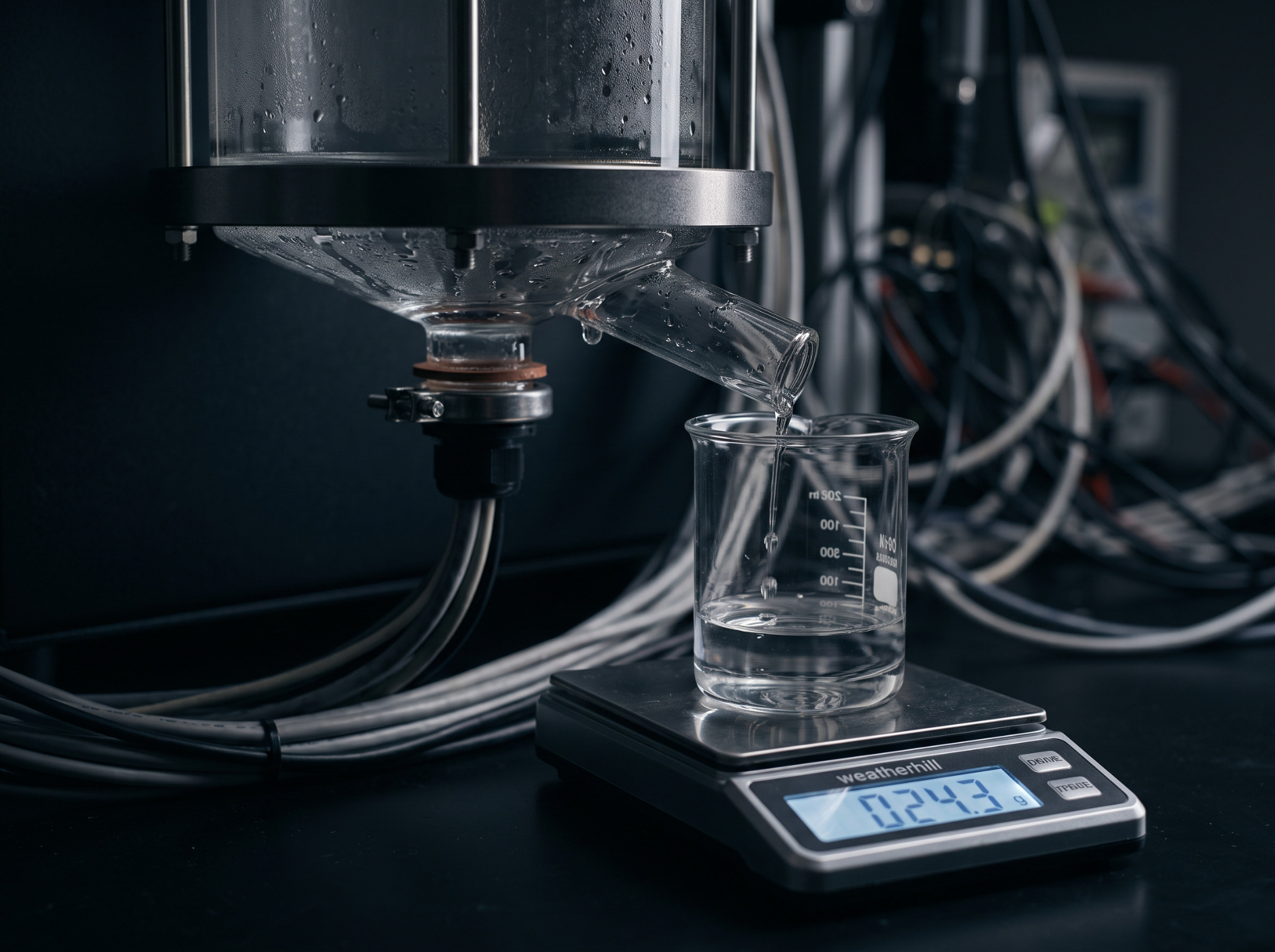
PondFall is a family of hypotheses. Each route needs its own comparator, footprint and measurement of water actually reaching the receiver.
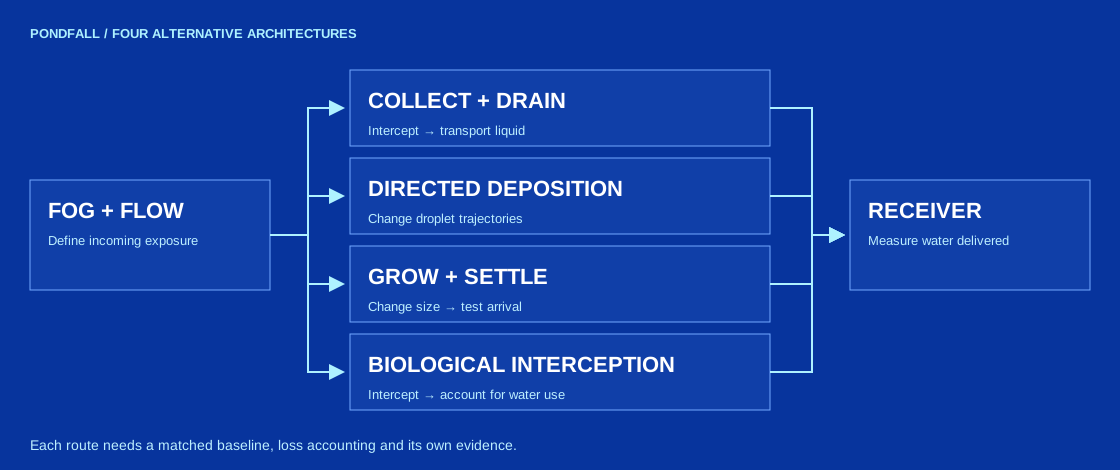
Intercept droplets on a structure and drain the liquid to storage. This is the most direct baseline for separating capture from delivery.
Test: water at collector outlet versus water entering the receiver.Investigate whether forces or controlled airflow can move droplets toward a receiver. Published electrostatic capture on solid collectors is a starting point, not proof of direct-to-pond delivery.
Test: spatial deposition map and matched receiver gain.Ask whether a size change leads to greater receiver delivery before wind or evaporation removes the water. Growth, settling and collection are separate outcomes.
Test: wet size distributions, residence time and recovered mass.Study interception by vegetation and the water’s subsequent path. Ecosystem deposition, plant uptake and drainage to storage have different endpoints.
Test: throughfall, stemflow, water use and receiver delivery.Selected primary research, with the connection to this program made explicit. These are results from the named authors, not Weatherhill trials.
Westbeld and colleagues measured fog-water flux over a Tillandsia carpet in the Atacama. The study highlights changing fluxes and the need for broader seasonal observations.
Could an interception architecture deliver a useful surplus after ecological water use and other losses?
Space-charge experiments show that electrical forces can direct droplets onto a solid collector.
What additional evidence would establish delivery into a different receiver under open-air flow?
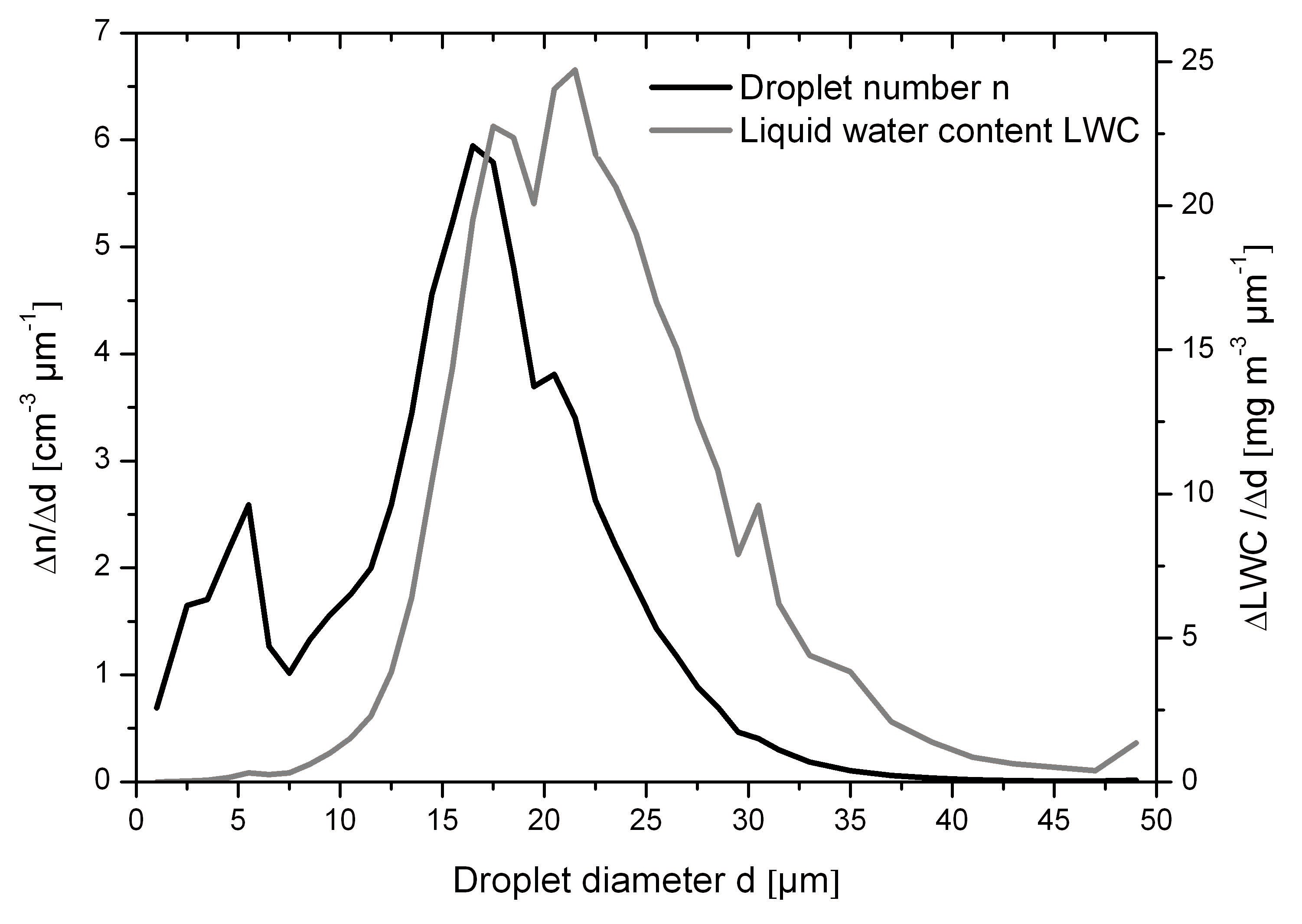
The UAE observations connect droplet spectra, liquid water content, visibility and estimated sedimentation velocity.
Can a measured size shift persist long enough to change where the water lands?
Kirigami-collector experiments investigate how geometry influences deposition and subsequent dripping.
How much intercepted water reaches storage rather than remaining on a surface or leaving the collection boundary?
Published figures from independent research. Open any image at full size, then follow its source.
 ENLARGE ↗
Observed size distributions over a Tillandsia carpet: droplet number and liquid water content peak at different sizes.
Westbeld, Klemm, Grießbaum, Sträter, Larrain, Osses & Cereceda · 2009 · Annales Geophysicae, Fig. 1. Original paper ↗ · CC BY 3.0. Figure reproduced without content changes; web display resized.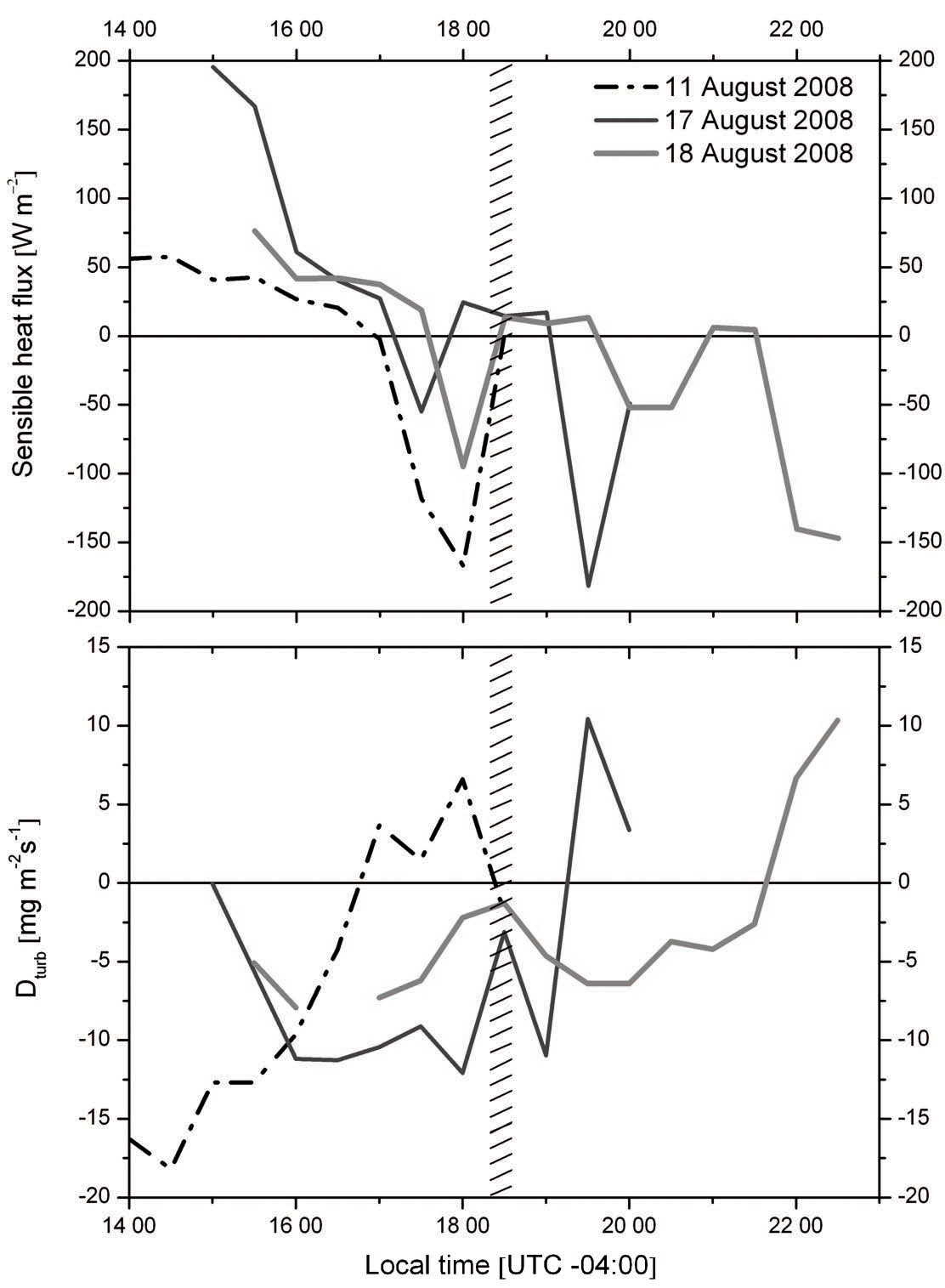 ENLARGE ↗
Published time series of turbulent fog-water and sensible-heat flux over Tillandsia vegetation. Natural deposition includes changing and sometimes upward fluxes.
Westbeld, Klemm, Grießbaum, Sträter, Larrain, Osses & Cereceda · 2009 · Annales Geophysicae, Fig. 2. Original paper ↗ · CC BY 3.0. Figure reproduced without content changes; web display resized.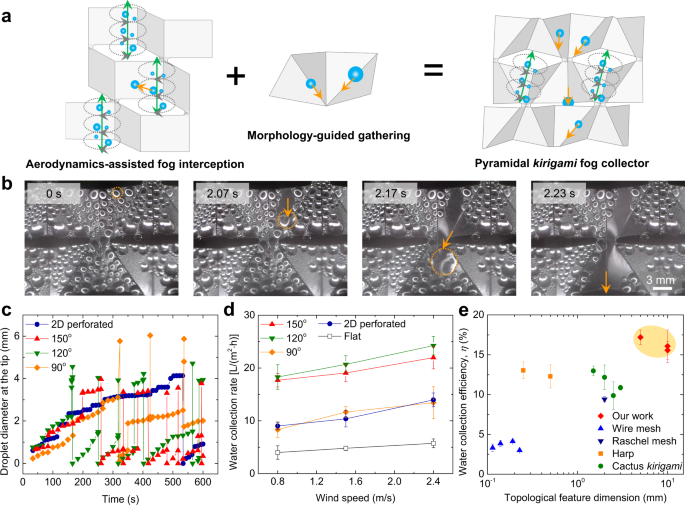 ENLARGE ↗
Published experiments on droplet drainage from pyramidal kirigami collectors. A collecting surface and its drainage route act as one system.
Li, Ran, Wang, Wang, Chen, Niu, Arratia & Yang · 2021 · Nature Communications, Fig. 3. Original paper ↗ · CC BY 4.0. Figure reproduced without content changes; web display resized.An intervention can add water while the pond still loses water overall. This calculator keeps those two statements separate.
Enter hypothetical daily equivalent water depths over the receiver. These inputs describe a scenario; the tool does not predict deposition.
Enable JavaScript to calculate this scenario.
The comparison holds evaporation, rain and withdrawals equal between conditions. If the intervention changes them, measure that change separately. Overflow, changing surface area, seepage dynamics and initial storage are not modeled.
1 mm over 1 m² = 1 L. Net change = area × (deposition + rain − evaporation) − withdrawals and other losses. Increment = intervention net − baseline net. Added energy = power × hours / 1000 kWh. Energy per incremental m³ = added kWh / (positive increment in L / 1000); undefined when the increment is zero or negative.
Inspect an ideal charged-droplet trajectory scale.
Engineering / OPEN TOOL ↗Compare transit and reset times with the proposed interaction.
Optics / OPEN TOOL ↗Distinguish a size shift from a change in water or extinction.
Engineering / OPEN TOOL ↗Track water-normalized energy for a measured collection rate.
Optics / OPEN TOOL ↗Explore why water mass and optical change can diverge.
Atmosphere / OPEN TOOL ↗Inspect the ideal latent-energy scale for evaporating fog.
The complete tools include methods, assumptions and export controls. Open all 15 tools →
A staged program: measurements, comparisons and a decision before the next scale.
Define the receiver, relevant upwind volume and delivery path. State what observation would reject the proposed mechanism.
Advance when: the endpoint is water delivered and the comparator is physically meaningful.Use a spatial array of weighed receivers with inlet/outlet droplet measurements. Track water deposited outside the target and retained on hardware.
Advance when: a repeatable receiver gain has a closed mass accounting.Repeat matched comparisons across measured wind and fog conditions. Record natural deposition, rainfall, evaporation and water diverted from nearby surfaces.
Advance when: the effect persists in the defined conditions without relying on optical clearing alone.Report incremental water, whole-system energy, water quality, maintenance and ecological effects for the selected architecture.
Advance when: the next scale is supported by useful water and a credible operating boundary.CSV templates contain headers and units only. No measurements or results are prefilled.
Every paper below opens at its DOI. The figures above carry their own source and reuse license.
Research selection checked 13 October 2026. Program connections are Weatherhill’s proposed applications of the literature.
Instrument development, field water and controlled deposition share a measurement foundation.
Google Analytics helps us understand which pages are useful. Without analytics cookies, Google still receives limited cookieless measurements and consent signals. Cookies are used only if you allow them. Every tool and paper is available either way. Privacy details